Why does Mount Etna have two names—and are they actually the same thing?
If you’ve come across the term “Mongibello Etna,” you’re not alone in feeling confused. Some sources treat it as a nickname, others as a place, and a few make it sound like a completely different mountain.
The reality is simpler—but also more interesting. Understanding “Mongibello” reveals not just what Etna is called, but how centuries of overlapping cultures shaped the identity of Sicily’s most iconic volcano.
- Mongibello and Etna refer to the same volcano
- “Mongibello” means “mountain mountain”
- The name blends Arabic and Latin influences
- “Etna” comes from Greek and means “to burn”
- Mongibello is still used locally in Sicily
- The dual naming reflects Sicily’s layered history
- Mount Etna is Europe’s most active volcano and a UNESCO World Heritage Site
What Is Mongibello Etna? (Clear Definition First)
Yes—Mongibello and Mount Etna refer to the same volcano in Sicily.
“Etna” is the official and internationally recognised name. “Mongibello” is a traditional, culturally rooted name still used by locals. There is no physical difference between the two—they describe the same mountain.
Is Mongibello a Name, Region, or Nickname?
Mongibello is primarily a historical and cultural name, not a separate region or official designation.
That said, there is a specific geographical nuance worth knowing: in both everyday speech and some technical geological contexts, “Mongibello” is used to refer specifically to the summit zone—the area of the active central craters at the top of the cone. “Etna,” in these cases, describes the broader mountain massif. In practice, most people—locals and tourists alike—use the names interchangeably without worrying about this distinction. But it explains why you occasionally see “Mongibello” used as though it refers to something slightly more specific than just a synonym for Etna.
What Does “Mongibello” Mean? (Simple Explanation)
Literal Meaning: “Mountain Mountain”
The word “Mongibello” literally translates to “mountain mountain.”
It combines two words from different languages that mean the same thing:
- Latin: “mons” = mountain
- Arabic: “gebel” (or jebel) = mountain
Why the Name Sounds Repetitive
This repetition isn’t a mistake—it’s the result of linguistic layering across generations.
As different civilisations passed through Sicily, they built on existing names rather than replacing them. The Arabic word gebel was already in use when Norman rulers arrived. Because the Normans didn’t know gebel meant “mountain,” they simply added the Latin word mons in front of it—essentially labelling it “Mount Gebel.” Over time, that evolved into “Mongibello.” The repetition wasn’t intentional; it was a natural consequence of one language being layered over another without full understanding of the original.
The Origins of the Names Etna and Mongibello
Greek Origin of “Etna”
The name “Etna” comes from the ancient Greek word “Aitna,” linked to a verb meaning “to burn.”
This reflects how early Greek settlers experienced the volcano—not as scenery, but as a powerful, fiery force. In Greek mythology, Etna was also associated with Hephaestus (Vulcan to the Romans), whose forge was said to burn beneath the mountain—a story that helped cement both the name and the volcano’s mythological weight.
Arabic Influence: “Jebel”
During Arab rule in Sicily, the volcano was described using “jebel,” meaning mountain. The full Arabic name was reportedly Gebel al Nar—mountain of fire—later shortened simply to Gebel.
This term highlighted the volcano’s sheer physical dominance in the landscape, stripping away the fire mythology in favour of something more literal.
Latin Influence: “Mons”
When Norman rulers later took control of Sicily, they encountered the Arabic name Gebel but didn’t know its meaning. Treating it as a proper noun rather than a descriptive word, they added the Latin mons in front—giving the mountain a double label without realising it.
The result was Mons Gebel, which gradually softened into “Mongibello” over the following centuries.
Evolution Timeline
The transformation didn’t happen overnight. It followed a gradual path:
- Greek: Aitna (fire-based identity)
- Arabic: Gebel al Nar / Gebel (geographic emphasis)
- Norman Latin: Mons Gebel (Latin added without knowing “gebel” = mountain)
- Combined evolution: Mons Gebel → Mongibello
This timeline explains why the name carries both meaning and history—and why the redundancy was accidental rather than poetic.
Etna vs Mongibello: Key Differences Explained
| Aspect | Etna | Mongibello |
|---|---|---|
| Type | Official name | Cultural/traditional name |
| Origin | Greek | Arabic + Latin (Norman) |
| Usage | Global, scientific, maps | Local, historical, cultural |
| Meaning | “To burn” | “Mountain mountain” |
This distinction matters because it clears up a common misunderstanding: Mongibello is not an alternative location—it’s an alternative lens.
How Locals in Sicily Use the Name “Mongibello”
Dialect Version: Muncibbeḍḍu
In Sicilian dialect, the name appears as “Muncibbeḍḍu.”
This version reflects how deeply rooted the term is in everyday language, not just history books.
The Even More Local Name: “A Muntagna”
For many people who actually live on or near the volcano, neither “Etna” nor “Mongibello” captures the full weight of it. They simply call it ‘a muntagna—”the mountain.” No further description needed. The definite article does all the work, carrying a quiet sense of respect that no official name quite replicates.
Cultural Identity and Emotional Connection
For many locals, Mongibello feels more personal than “Etna.”
It represents familiarity, tradition, and a long-standing relationship with the volcano—one that includes both respect and dependence. The volcanic soil that occasionally threatens communities is the same soil that makes their vineyards and orchards so productive. That tension is baked into the name.
Is the Term Still Common Today?
Mostly in informal or cultural contexts, yes. You’ll hear it in conversation, local storytelling, and sometimes in tourism branding. Official documents and maps, however, almost always use “Mount Etna”—partly for international clarity, and partly because “Mongibello” never made it into formal administrative use.
Mount Etna (Mongibello) Overview: Key Facts You Should Know
Location and Geography
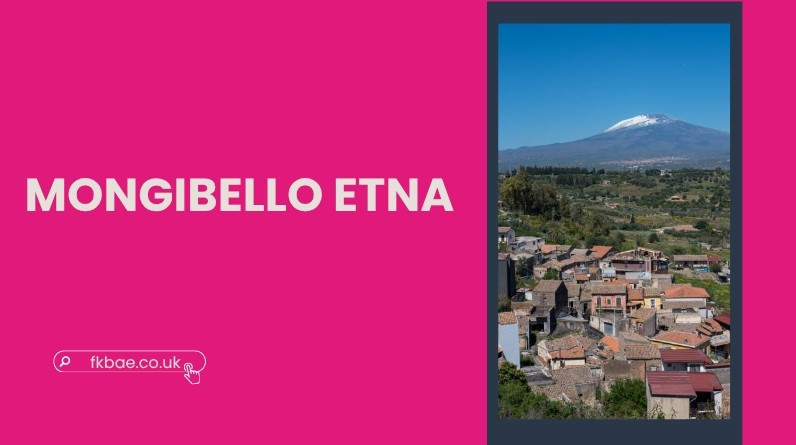
Mount Etna sits on the east coast of Sicily, near the city of Catania. It covers an area of roughly 1,190 km² and is visible from miles away in almost every direction—a permanent feature of the Sicilian skyline.
Height and Changing Summit
Etna stands at over 3,300 metres, but its height isn’t fixed. Frequent eruptions reshape the summit cone, meaning the highest point can shift meaningfully over time—sometimes by tens of metres in a single eruptive cycle.
Activity and Eruptions
It is one of the most active volcanoes in the world, and has been monitored continuously for decades. Rather than rare catastrophic events, Etna typically produces smaller, frequent eruptions—lava fountains, ash clouds, and slow-moving lava flows that scientists can observe relatively safely from designated monitoring points.
UNESCO Recognition
In 2013, Mount Etna was added to the UNESCO World Heritage Sites list, recognised for its outstanding geological significance and its long record of documented eruptions dating back more than 2,700 years.
Why the Soil Is So Fertile
Volcanic ash and lava, once broken down over time, release minerals that enrich the surrounding land. That’s why the slopes of Etna are covered in vineyards, olive groves, orchards, and pistachio farms—despite the risks that come with living next to an active volcano.
Why Does Mount Etna Have Multiple Names?
Influence of Different Civilisations
Sicily has been ruled or settled by Greeks, Romans, Arabs, Normans, and others over its long history. Each group encountered the volcano through their own language, mythology, and sense of place—and named it accordingly.
Linguistic Layering
Instead of replacing older names, incoming cultures often built on top of them—sometimes without knowing the original meaning. This layering created hybrid terms like Mongibello, where two languages describe the same thing without either cancelling the other out.
Similar Naming Patterns Worldwide
This phenomenon isn’t unique to Sicily. There are other places globally where geographic names repeat meanings across languages due to successive waves of settlement or conquest—making Mongibello part of a broader, well-documented linguistic pattern rather than an oddity specific to Etna.
Common Misconceptions About Mongibello Etna
“Mongibello Is a Different Volcano”
False. It’s the same mountain as Etna.
“Mongibello Is an Official Name”
Not exactly. It’s culturally significant but not used in formal or scientific contexts—with the partial exception of geological maps, where “Mongibello” sometimes labels the active summit crater zone.
“It Refers to a Specific Area Only”
Sometimes used loosely for the broader region, but originally it refers to the volcano itself. The more specific summit-zone usage is a technical distinction that rarely comes up outside geological literature.
Is Mongibello Used in Tourism, Maps, or Official Contexts?
Usage in Travel
You may see “Mongibello” in tour names or local experiences. It adds authenticity and cultural depth—a signal that whoever is using it knows the mountain’s history rather than just its official label.
Maps and Official Documents
These almost always use “Mount Etna.” This ensures clarity for international audiences and aligns with how the volcano is listed in scientific, administrative, and UNESCO documentation.
Literary and Cultural References
The name Mongibello occasionally appears in literature and storytelling. It even features in Arthurian legend—medieval tales placed the mythical castle of Morgan le Fay beneath Etna, referred to as “Mongibel” in those accounts. It carries a more atmospheric, historically layered tone compared to the scientific precision of “Etna.”
FAQs About Mongibello Etna
What volcano is called Mongibello?
Mount Etna in Sicily is also known as Mongibello.
Why is Mount Etna called Mongibello?
The name evolved from Arabic and Latin words both meaning “mountain,” combined during the Norman period into a double label that stuck.
What does Mongibello mean?
It literally means “mountain mountain.”
Is Mongibello still used today?
Yes, mainly in local and cultural contexts rather than official ones. You’ll also find it on some geological maps referring to the active summit crater zone.
Where is Mongibello located?
It refers to Mount Etna, located on the eastern coast of Sicily, Italy, near the city of Catania.
Conclusion
Mongibello Etna isn’t about two different places—it’s about two ways of understanding the same mountain.
“Etna” tells you what the volcano does: it burns, erupts, and shapes the land. “Mongibello” tells you how people relate to it—as a defining presence layered with centuries of history, language, and meaning built up by every civilisation that ever looked up at it.
Once you see that distinction, the confusion disappears—and what remains is a richer, more complete picture of one of Europe’s most remarkable natural landmarks.