- Top must-do experiences in Marrakech (prioritized)
- 1, 2, and 3-day itineraries for different travel styles
- How to explore the Medina and souks without stress
- What to eat and where to try it
- Hammam experience explained step-by-step
- Where to stay (Medina vs modern areas)
- Daily budget breakdown
- Best time to visit and when to avoid crowds
- Common mistakes and what’s actually worth it
Why Marrakech Feels Overwhelming (And How to Experience It Properly)
Marrakech isn’t difficult because there’s too little to do — it’s difficult because there’s too much happening at once. The noise, the crowds, the maze-like streets, the persistent sellers — it hits all your senses simultaneously, and it can feel chaotic if you don’t approach it with a loose plan.
Most first-time visitors try to “see everything,” and end up exhausted by lunchtime. The smarter approach is simpler: prioritize a few meaningful experiences, leave room to wander, and give yourself time to actually absorb what you’re seeing.
What Most First-Time Visitors Get Wrong
- Trying to visit every attraction in a single day
- Entering the souks without any sense of direction or budget
- Ignoring timing — crowds and summer heat can significantly shape your experience
How to Approach the City Without Stress
- Focus on 3–4 key experiences per day maximum
- Plan mornings early and let afternoons slow down naturally
- Use major landmarks as anchors instead of relying fully on maps
- Consider joining a free walking tour on your first day — a knowledgeable local guide makes the Medina feel navigable, not intimidating
Top Things to Do in Marrakech (Ranked by Priority)
Must-Do Experiences (If You’re Short on Time)
- Jemaa el-Fnaa: Visit at sunset when this UNESCO-recognized square transforms from a daytime market into a living open-air theater — storytellers, drummers, sizzling food stalls, and snake charmers all compete for your attention at once
- Souks: Explore the maze of markets for spices, leather, handcrafted lanterns, and textiles — getting a little lost is part of the appeal
- Bahia Palace: Stunning hand-painted ceilings, carved cedar woodwork, and serene courtyards (note: some sections are still undergoing post-2023 earthquake restoration)
- Jardin Majorelle: A tranquil escape from the medina’s energy, defined by the iconic cobalt-blue villa and exotic plantings — also home to the YSL Museum. Book timed-entry tickets in advance online, as walk-up slots sell out fast
High-Value Cultural Attractions
- Ben Youssef Medersa — a 14th-century Quranic school with some of the finest Islamic geometric tilework and carved plaster you’ll see anywhere in Morocco
- Saadian Tombs — ornate marble burial chambers rediscovered in 1917, quieter than the major palaces and genuinely moving to walk through
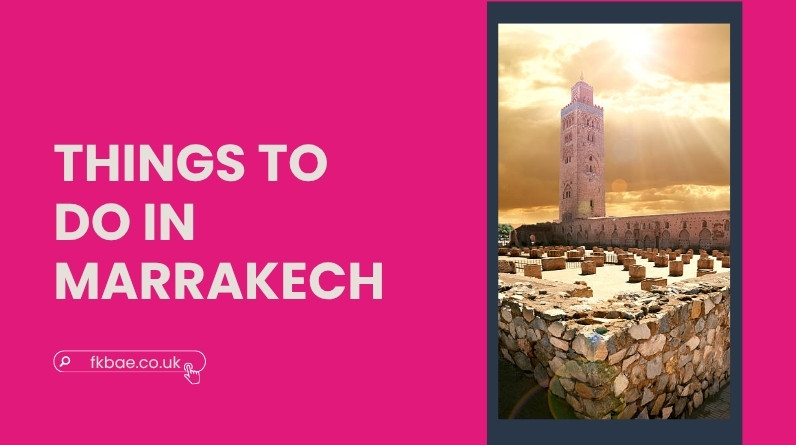
- Koutoubia Mosque — best appreciated from the outside; its 77-metre minaret is the city’s most recognizable skyline landmark
- El Badi Palace — atmospheric ruins that once housed 300 rooms decorated with gold and onyx; storks nest here now, and it’s a satisfying contrast to the more polished palace interiors
Unique Local Experiences
- Traditional hammam spa
- Rooftop dining at sunset — sipping mint tea as the call to prayer echoes across the medina is genuinely one of those moments that stays with you
- Staying in a riad
- Hot air balloon at sunrise — a growing favourite among visitors, this early-morning flight offers a completely different perspective of the city and the plains surrounding it. You’ll need to leave well before dawn, but most who do it say it’s the highlight of their trip
Day Trips Worth Taking
- Atlas Mountains — nature, Berber villages, and a striking change of pace from the city
- Agafay Desert — closer than the Sahara (roughly 30–45 minutes), ideal for camel rides and sunset dinners beneath open skies without a full-day commitment
- Ouzoud Waterfalls — one of Morocco’s most beautiful cascades, surrounded by olive groves and wild Barbary macaques; a refreshing contrast to the medina and well worth the 2-hour drive
1, 2, and 3-Day Marrakech Itineraries
1-Day Itinerary (Fast Highlights)
- Morning: Bahia Palace + Medina walk
- Afternoon: Souks + lunch at a local restaurant away from the main square
- Evening: Jemaa el-Fnaa + rooftop dinner
2-Day Itinerary (Balanced)
- Day 1: Medina, souks, Jemaa el-Fnaa at dusk
- Day 2: Jardin Majorelle + YSL Museum, Ben Youssef Medersa, hammam in the late afternoon
3-Day Itinerary (Full Experience)
- Day 1–2: City highlights as above
- Day 3: Atlas Mountains or Agafay Desert day trip
These itineraries reduce decision fatigue and make sure you’re not spending half your trip navigating blindly between things that don’t connect well geographically.
How to Explore the Marrakech Medina & Souks
How the Souks Are Structured
The souks are loosely organized by product type — leather tanners cluster in one section, spice traders in another, textile merchants nearby — but they still feel like a maze. Expect to get turned around, and treat it as part of the experience rather than a problem to solve.
Navigation Strategy
- Use major landmarks like Jemaa el-Fnaa as your anchor point and reorient from there
- Save your riad’s address and a map pin offline before heading out
- Follow wider paths first to get a general sense of layout, then explore the narrower alleys
Bargaining Strategy That Works
- Start at 40–50% of the asking price — initial quotes are almost always inflated for tourists
- Stay polite but firm; sellers generally respond better to calm persistence than aggression
- Walk away if negotiations stall — vendors will often call you back with a better price
- A simple “la shukran” (no thank you in Arabic) is genuinely effective at keeping persistent sellers at bay without causing offence
Common Scams to Avoid
- “This road is closed, I’ll show you another way” — usually false, and usually leads to a shop
- Uninvited “guides” who walk alongside you and then demand payment
- Photo charges around Jemaa el-Fnaa — always confirm before pointing a camera at performers or animals
- Diluted fresh juices on the main square — opt for vendors in the side streets for the real thing
What to Eat in Marrakech (And Where to Try It)
Must-Try Moroccan Dishes
- Tagine — slow-cooked stew with lamb, chicken, or vegetables, fragrant with preserved lemon and olives
- Couscous — traditionally served on Fridays in family homes; worth seeking out at restaurants that do it properly
- Pastilla — a sweet and savory pastry with pigeon or chicken, almonds, and powdered sugar; an unusual combination that works beautifully
- Fresh orange juice — Jemaa el-Fnaa is full of juice stalls; stick to vendors in the side streets for better quality
- Mint tea — served everywhere and offered freely by shopkeepers; accepting a glass is a pleasant way to slow down mid-souk
Where to Eat by Budget
| Budget | Street food stalls and local hole-in-the-wall restaurants |
| Mid-range | Casual sit-down restaurants in and around the Medina |
| Luxury | Rooftop dining with views or full-service riad restaurants |
Food Safety Tips
- Choose busy food stalls — high turnover is a reliable indicator of freshness
- Avoid uncooked items (raw salads, unpeeled fruit) if your stomach is sensitive to new environments
- Stick to bottled water and avoid using tap water even for brushing teeth
Hammam Experience Explained (Step-by-Step)
What Happens Inside
You’ll move through a steam room, progressively warmer in stages, followed by a thorough full-body scrub using traditional black soap (savon beldi). The kessa mitt used for exfoliation is more intense than anything you’d experience in a standard Western spa — don’t be surprised by just how much dead skin gets removed. You’ll emerge genuinely glowing.
Public vs Luxury Hammams
- Public hammams: authentic, inexpensive, and the way locals actually use them — but less private and with no English-speaking guidance
- Luxury hammams: spa-like surroundings, more comfortable for first-timers, and staff who walk you through each stage
What to Expect
This isn’t a typical spa treatment — it’s a cultural ritual with its own rhythm and etiquette. Understanding that beforehand removes any awkwardness and lets you actually enjoy it. If it’s your first time, a mid-range tourist-friendly hammam is a sensible starting point before trying a public one.
Where to Stay in Marrakech
Medina vs Gueliz
- Medina: Traditional, central, and immersive — you’re steps from everything, though the streets can feel chaotic after a long day
- Gueliz: Marrakech’s modern French-influenced quarter — quieter, easier to navigate, with more familiar café and restaurant options
Why Stay in a Riad
Riads are traditional Moroccan courtyard houses built around a central garden or fountain — designed specifically to be peaceful and inward-facing, shutting out the noise of the streets. Many have been beautifully restored with intricate tilework, plunge pools, and rooftop terraces. If you’re staying in the Medina, a riad is genuinely the best way to do it.
Budget Guide: How Much Does Marrakech Cost?
| Budget traveller | $30–$60/day |
| Mid-range | $70–$150/day |
| Luxury | $200+/day |
Accommodation is the biggest variable — a basic guesthouse and a high-end riad can differ by a factor of ten. Food and entry fees are relatively modest for most visitors.
Best Time to Visit Marrakech
- Best: March–May and September–November — temperatures are comfortable, crowds are manageable, and the city’s gardens are at their most vivid
- Avoid if possible: June–August, when daytime temperatures regularly exceed 40°C and outdoor sightseeing becomes genuinely draining
- Practical tip: Hit major attractions like Jardin Majorelle and Bahia Palace before 9am — the difference in crowd levels is substantial
Common Mistakes to Avoid
- Overpacking your itinerary — Marrakech rewards slowing down more than speeding up
- Not negotiating prices in the souks (it’s expected and factored into the asking price)
- Ignoring cultural dress norms — particularly in the Medina, modest clothing is both respectful and practical
- Visiting major attractions at midday, when both heat and crowds peak
- Accepting help from strangers near your accommodation — the “helpful hotel porter” approach is a well-worn scam
What’s Overrated vs Worth It
Overrated
- Rushing through multiple palaces back-to-back — after the second ornate courtyard, they start to blur together
- Chasing popular Instagram spots without context — the photo exists, but the experience rarely matches the image
Worth It
- Slow, unhurried exploration of the souks across more than one visit
- A rooftop at sunset — genuinely one of those views that earns its reputation
- A day trip outside the city; the contrast with the medina’s intensity makes both feel more vivid
- A hot air balloon at sunrise — early start, but the perspective of the Atlas foothills at first light is unlike anything else on offer
Practical Travel Tips
- Dress modestly, especially in the Medina — loose layers work well for both cultural respect and the heat
- Carry small cash at all times; souks and street stalls rarely accept cards
- Use petit taxis for longer journeys — agree on a price or insist on the meter before getting in
- Stay aware in crowds, particularly around Jemaa el-Fnaa, but don’t let caution tip into paranoia — the vast majority of interactions are genuinely friendly
FAQs About Things to Do in Marrakech
How many days do you need in Marrakech?
Two to three days covers the main highlights comfortably. Add a fourth day if you want to take a day trip outside the city — the Agafay Desert or Atlas Mountains both deserve more than a rushed afternoon.
Is Marrakech safe for tourists?
Yes, it’s generally considered safe for tourists. The most common issues are petty scams and persistent touts rather than anything more serious — staying alert in crowded areas and firm with unwanted attention is usually all that’s needed.
Can you explore Marrakech on foot?
Yes — the Medina in particular is best explored on foot. Just expect a lot of walking, uneven surfaces, and the occasional motorbike appearing from nowhere in a narrow alley.
Is Marrakech expensive?
It spans a wide range. Budget travellers can eat well and see a lot for very little; the luxury end — private riads, high-end hammams, rooftop restaurants — can be genuinely extravagant. Most visitors find it excellent value by European standards either way.
Conclusion
Marrakech is not a city you “complete” — it’s one you experience at its own pace. The key is not to rush, but to choose wisely. Focus on a few meaningful activities each day, leave room to wander without a plan, and embrace the occasional wrong turn down an alley that leads somewhere unexpected.
If you plan with intention — using the itineraries, practical tips, and honest guidance above — you’ll sidestep the overwhelm that catches most first-time visitors and instead find a city that’s chaotic, beautiful, and genuinely unlike anywhere else.